New Swedish report: Railway expansion can be accelerated

svensk-eltog-femern-belt-development

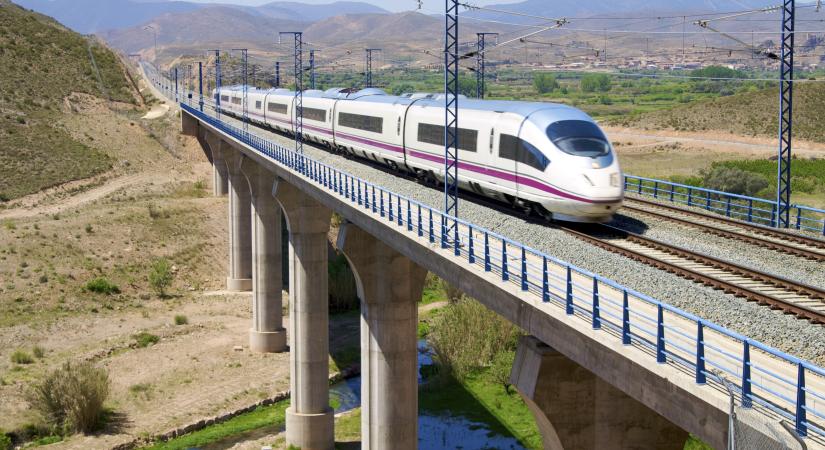
Several important railway sections in Skåne can be brought forward ahead of the opening of the fixed Fehmarnbelt link.
This is stated in a new report from the Swedish Transport Administration, Trafikverket, to the Swedish government.

In recent years, both Danish and Swedish politicians and business organisations have called for a faster expansion of the Swedish railway network. Now Trafikverket concludes that the development of the railway network in the Öresund region can be advanced by several years. This is stated on Trafikverket’s website.

“The cross-border traffic in the Öresund region has shown positive development for many years, and we are already actively working on preparations for the opening of the Fehmarnbelt link. As traffic across the Öresund is expected to increase further in the coming decades, we see a need for stronger Danish-Swedish cooperation on issues such as traffic forecasts, capacity planning and contingency planning. Traffic management and disruption handling can also be further developed in the future,” says Anna Wildt-Persson, Regional Director of Trafikverket’s Southern Region.

Capacity-enhancing measures
In its report to the Swedish government, Trafikverket has also taken a closer look at railway measures linked to the Södra stambanan (the line from Malmö to Katrineholm, ed.), which are included in the national plan. This is stated on Trafikverket’s website.

The report concludes that several capacity-enhancing measures can be brought forward so that they better align with the opening of the Fehmarnbelt link. For some measures, this means an advancement of several years.

“The fact that measures can be implemented earlier is not only important for traffic across the Öresund. It also adds significant value for both long-distance and commuter rail services. More capacity sooner means less vulnerability to disruptions and more reliable traffic. Everyone benefits from that. At the same time, it is important to stress that bringing measures forward requires fast processing of procedures that lie outside Trafikverket’s direct control. This includes, for example, construction start decisions and appeals against railway plans,” says Anna Wildt-Persson.

Plans to upgrade freight yards
Trafikverket’s proposal for a new national plan for 2026–2037 also includes the possibility of strengthening several freight yards, including in Malmö and Trelleborg. In addition, an investigation of the freight yard in Helsingborg is planned.

“Traffic across the Öresund is one of Trafikverket’s highest priorities, and we are confident that we are implementing the right measures to meet the increasing traffic volumes. Our proposal for the new national plan also includes further capacity-enhancing measures along the Södra stambanan that can be implemented if additional funding becomes available. In addition, there are other important measures that we believe can be financed through the surplus from the Öresund Bridge,” says Anna Wildt-Persson on Trafikverket’s website.

Growing pressure for expansion of the Scandinavian rail network

tog-femern-belt-evelopment

The European TEN-T corridor is in focus.
In Sweden, politicians and the business community are calling for faster expansion, in Denmark there are calls for a comprehensive plan, and in Germany the expansion of the line between Puttgarden and Lübeck is gaining real momentum this year.

Ahead of the opening of the Fehmarn Belt fixed link, pressure is increasing to develop the important TEN-T corridor into a coherent and efficient rail network stretching from Northern Scandinavia to Sicily.
In particular, the Swedish rail network is today regarded as an obstacle to fully realising the benefits of the fixed link between Denmark and Germany.

carl-johan-sonesson-femern-belt-development
Carl Johan Sonesson – will put pressure on the Swedish government. Photo: Greater Copenhagen

Most recently, the chairman of the Regional Council of Region Skåne, Carl Johan Sonesson, who has been elected chairman of the Danish-Swedish cooperation organisation between regions and municipalities in southern Sweden and eastern Denmark, Greater Copenhagen, has highlighted the issue.
“We must put pressure on the Swedish government to ensure that important investments in rail infrastructure are included in the national plan to be adopted in the spring. This applies especially to the Lund–Hässleholm and Helsingborg–Maria lines. To a large extent, this is about preparing the region so that we can fully exploit the potential that the Fehmarn Belt fixed link will create,” says Carl Johan Sonesson.

Risk of losing competitiveness
Previously, the spokesperson for Region Jönköpings Län, Rachel De Basso, and the director of Femern Belt Development, Stig Rømer Winther, have pointed to the Swedish rail network as a significant bottleneck on the European TEN-T corridor from Northern Scandinavia to Sicily.
This was stated, among other occasions, in connection with the European rail conference “A New Railway for a New Europe” in Brussels.

“Without a coherent national network including key routes such as Stockholm–Linköping–Gothenburg–Borås, Jönköping–Borås, the four-track expansion in Skåne, the Vättern link, as well as Oslo–Gothenburg and Oslo–Stockholm, Sweden risks losing both its international competitiveness and national confidence in the rail system,” says Rachel De Basso.

Support for Swedish business
“Both Denmark and Germany are investing heavily in rail expansion, but Sweden is not keeping up the pace. There is a risk that Sweden – which once strongly pushed for the Fehmarn Belt fixed link – could now instead become a bottleneck,” says Stig Rømer Winther, director of Femern Belt Development.

He points out that several major Swedish logistics companies emphasise that the Fehmarn Belt fixed link opens up entirely new opportunities for increased trade between continental Europe and Scandinavia, but that the current Swedish rail network represents a bottleneck.

“I therefore encourage both Denmark and Germany to support the wishes of Swedish business for an expansion of the rail network,” says Stig Rømer Winther.

Call for a comprehensive Danish plan

Hakon-iversen-femern-belt-development
Hakon Iversen – calls for a plan for the Danish rail network. Photo: DI Transport

The Confederation of Danish Industry (Dansk Industri) is also focusing on rail transport and the opportunities arising from the Fehmarn Belt fixed link.
Hakon Iversen, sector director at DI Transport and vice-chairman of Femern Belt Development, writes in an article on Dansk Industri’s website that there is a need for a comprehensive plan for the future of rail, and that public transport – including rail – is crucial to everyday life for many people and to the opportunities available to businesses.

“Rail also has a significant role to play in freight transport, especially in the future between Scandinavia and the continent, when the new Fehmarn Belt link opens up entirely new opportunities – and likewise as part of future military mobility. In the military field, rail already plays a strategic role among our allies both in Scandinavia and towards the south and southeast,” Hakon Iversen states in his article, which has also been published by Altinget.

Momentum in the expansion of the German rail line
In Germany, the 88-kilometre rail line through Ostholstein from the future Fehmarn Belt tunnel to Lübeck is being expanded to double track.
Construction work began in 2025 and will gain significant momentum in 2026.

The project is divided into eight sections. In addition to the rail line itself, new bridges will be built for intersecting road traffic, and noise barriers will be constructed along parts of the 88-kilometre route.

Planning of one of the largest individual elements on the route between Puttgarden and Lübeck, the combined road and rail tunnel under the Fehmarnsund, will also begin this year.

Dialogue on the Future of the Tunnel Element Factory in Rødbyhavn is Now Open

tunnelelement-fabrikken-femern-belt-development

Sund & Bælt is now inviting potential operators to a market dialogue regarding the takeover of the tunnel element factory in Rødbyhavn and its continued operation after 2028, when the Fehmarn connection opens.
As the world’s largest concrete element factory, it has significant potential to supply other projects and purposes, such as tunnels, wind turbines, and other future Sund & Bælt projects. The market dialogue also aims to identify additional potential future uses for the factory.
Sund & Bælt expects to tender a long-term agreement concerning the operation, maintenance, and business development of the tunnel element factory and its associated work harbor to an operator starting in 2028.

Creating the Best Possible Conditions
To create the best possible conditions for the takeover of the factory’s operations, Sund & Bælt is now inviting potential companies and organizations to a so-called market dialogue, informs CEO of Sund & Bælt, Mikkel Hemmingsen.
“Winning a concession for the world’s largest element factory is, of course, a large and highly complex task. Therefore, it is crucial that we engage in dialogue with potential actors to understand their needs, competencies, and opportunities. This enables us to create the right framework for the future operation and development of the factory,” says Mikkel Hemmingsen.

The Factory is Here to Stay
The decision to retain the element factory was passed by the Danish Parliament on December 14, 2023. The law ensures that the factory and the work harbor in Rødbyhavn can be preserved and continue under state ownership through Sund & Bælt, once the production of tunnel elements for the Fehmarn Belt Tunnel is completed.
The factory can, in principle, produce many types of products for various purposes and projects such as tunnels or wind turbines.
The market dialogue consists of an introductory meeting and a tour of the factory in Rødbyhavn. Additionally, interested operators will be asked to complete a questionnaire, after which the further process will commence.
The insights from the market dialogue will be used to draft a tender for a long-term agreement, expected to take effect from 2028.

Facts
The element factory in Rødbyhavn is the largest of its kind in the world. It consists of three production halls designed to produce the 89 concrete elements needed for the Fehmarn Belt Tunnel.
A key part of the facility is the large work harbor, which ensures easy access to raw materials and the shipping of elements.
The total production area is 1.5 million m², equivalent to approximately 210 football fields.
It is estimated that society will save both resources and costs by retaining the factory, as upcoming infrastructure projects can be realized with savings in both time and money.

Blowing the whistle for departure: a new climate-friendly railway connecting Denmark and Europe

ringsted-femern-banen-femern-belt-development

2024 is to be the year in which the construction of the new climate-friendly railway connecting Europe via the future Fehmarn Belt Link really takes shape.

The approximately 115-kilometre-long Ringsted-Femern line has already been completed on the section between Ringsted and Nykøbing Falster.

In the coming years, DSB will expand and upgrade King Frederik IX's bridge over the Guldborg Sound at Nykøbing Falster and a new double-track railway will be built between Nykøbing Falster and Rødbyhavn.

Preparing for tomorrow’s green electric trains
During 2022 and 2023, the old single-track railway line between Nykøbing Falster and Rødbyhavn was removed by DSB. The new railway embankment that will carry the future double-track railway was then established.

At the same time, a new station has been built near Holeby on Lolland.

DSB is currently preparing to build the new railway across Lolland.

The work is expected to continue throughout 2024, after which the line will be electrified and prepared for tomorrow’s green electric trains.

In addition, the new pan-European digital signalling system ERTMS will be installed on the line, making it possible to run cross-border train traffic via the Fehmarn tunnel.

Climate-friendly transport corridor
The Ringsted-Femern line is amongst Denmark’s largest ever building projects.

It will be an important part of the future new climate-friendly transport corridor between Denmark and Europe when the Fehmarn Link opens as planned in 2029 and reduces the travel time between Copenhagen and Hamborg to approx. 2,5 hours.

Construction of a unique viewpoint for the Fehmarn belt construction started

pilen-femern-belt-development

The establishment of a new viewpoint - Pilen (The Arrow) - over the construction of the Fehmarn Belt tunnel was launched on 11th January 24, with the groundbreaking ceremony by Mayor Holger Schou Rasmussen, Lolland Municipality and CEO Mikkel Hemmingsen, Sund & Bælt, Femern A/S announces.

Unique front row view
The Arrow will be located on reclaimed land a few hundred metres from where the first tunnel element will be sunk into place and where traffic will enter the tunnel in the future. This will give visitors to the area a unique front row view of the extensive tunnel construction.

An experience in itself
The Arrow will be a ramp that gradually rises 217 metre upwards, which is the same length as a tunnel element, ending in a head pointing towards Germany.

The highest point of the ramp will be 24 metres above the surrounding landscape.

From The Arrow, visitors will be able to follow the floating departure of the tunnel elements, as well as following the construction of the tunnel portal and the future road and railway connection into the countryside.

The project also includes a new ramp and access path from the nearby car park on Gl. Badevej in Rødbyhavn.

In addition to giving visitors a better view of the work on the 18-kilometre-long immersed tunnel, a visit to The Arrow will be an experience in itself.

Aarsleff A/S is the entrepreneur working on the establishment of The Arrow, that is expected to be open to visitors at the beginning of 2025.

New milestone reached on Storstrømsbroen: Landfast from both sides

storstrømsbroen-femern-belt-development

Tuesday, January 16 marked another milestone in the construction of the new Storstrøm Bridge, as the bridge became landfast from both Masnedø and Falster.

"Now the gap between the bridge deck on land and over water is closed, and we have a landfast bridge on both sides of Storstrømmen. It's a great start to the new year. Once the bridge sections are landfast, it will be much easier to transport materials and tools to the work sites. In the future, the contractor can drive it to the work site without being dependent on a boat, so the construction work will be both easier and faster," says Project Manager Niels Gottlieb, Danish Road Directorate.

Approaching the pylon in the middle of Storstrømmen

Since October 2023, the bridge has been land fast on Falster, and the bridge is constantly getting longer and approaching the pylon in the middle of Storstrømmen.

"After the New Year, bridge element 10-11S was hoisted up on the Falster side, so we got two new bridge elements up in the first half of January. I can not be anything other than satisfied with that," says Niels Gottlieb.

The new Storstrøms Bridge will open for car traffic in 2025 and for train traffic in 2027.

storstrømsbroen-femern-belt-development
This is what the new Storstrøm Bridge will look like. Visualisation: Vejdirektoratet