Working Groups Accelerate Danish-German Integration in the Fehmarn Belt Region

dansk-tysk-femern-belt-developmenet

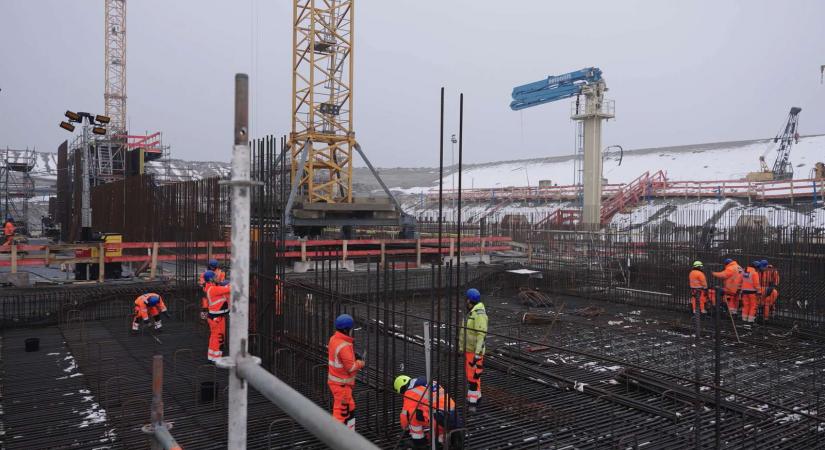
The Danish and German partners of the Fehmarn Belt Committee are stepping up their efforts to create a stronger and more integrated Fehmarn Belt Region ahead of the opening of the fixed Fehmarn Belt link.

With a focus on the economy, labour market, healthcare, tourism, schools, culture and education, the Committee plans to establish a number of working groups consisting of Danish and German representatives from politics, business and educational institutions.

The first of these groups, “Culture – Education – Schools”, has already begun its work.

Building an Integrated Danish-German Region
The Fehmarn Belt Committee was established in 2009 and today consists of 32 members. In addition to politicians, its members include representatives from business, the labour market, culture and tourism.

The chairmanship alternates between Denmark and Germany and is held this year by District Administrator (Landrat) Timo Gaarz of Ostholstein District.

“With these working groups, we are taking the next step in developing a shared Danish-German growth and cooperation area. The goal is to create projects and activities that strengthen integration and ensure that we achieve the greatest possible benefits from the future fixed Fehmarn Belt link,” says Timo Gaarz.

He also welcomes the strong support from experts and institutions on both sides of the border.

“It is essential that people with practical experience and professional expertise become actively involved in this work. This provides the best possible foundation for achieving results that make a real difference for the region’s citizens and businesses,” says Timo Gaarz.

First Working Group Underway
Twelve representatives from primary schools, upper secondary schools, vocational colleges, language schools and music schools in Denmark and Germany make up the working group “Culture – Education – Schools”.

The group’s objective is to ensure Danish-German cooperation from primary education through vocational and higher education to adult learning.

“Cross-border cooperation does not happen by itself. It requires committed people who establish contacts, develop projects and see activities through to completion. Teachers, lecturers and staff at educational institutions therefore play a crucial role in the success of this cooperation,” says Dorothee Schönfeldt, Project Coordinator at Femern Belt Development and Danish Secretary of the Fehmarn Belt Committee. On the German side, this role is carried out by Ostholstein District.

In the longer term, the aim is to make it possible for young people and adults in the region to study, work and cooperate across the border.

“When more people gain experience of the neighbouring country, use the language in practice and get to know one another better, it strengthens educational opportunities, the labour market and a shared regional identity,” says Dorothee Schönfeldt.
 

Strong German Engagement Opens the Highway to the Future of the Fehmarnbelt Region

stig-rømer-winther-femern-belt-development

A growing and significant German commitment to the upcoming Fehmarnbelt link is opening a highway of growth opportunities in the future Danish-German Fehmarnbelt Region.

This became clear during the three-day Fehmarnbelt Days event in Lübeck from 14 to 16 June.

“We witnessed strong German interest in expanding cross-border cooperation, which is becoming increasingly important as the Fehmarnbelt link approaches completion. I am pleased that there is now a solid foundation and a clear will to seriously accelerate Danish-German cooperation across the Fehmarnbelt,” says Stig Rømer Winther, Director of Femern Belt Development.

Strong Organisations
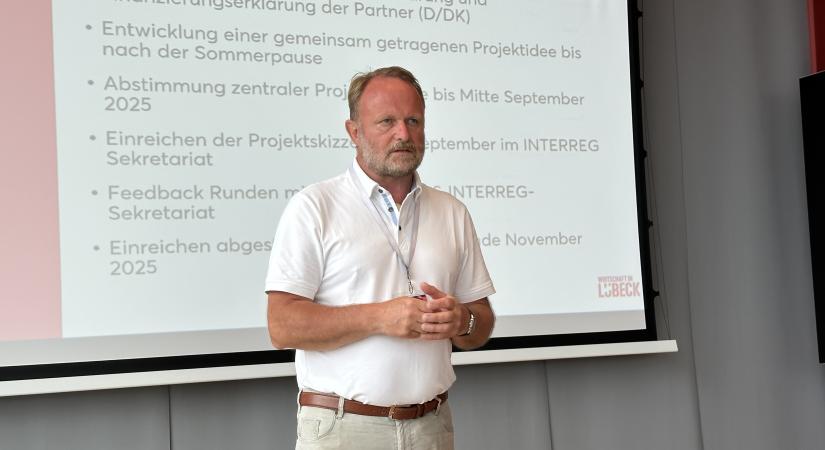
Together with Lübeck’s Senator for Economic Affairs, Pia Steinbrücke (SPD), and Director of the business organisation Wirtschaftsförderung Lübeck, Dirk Gerdes, Stig Rømer Winther presented a project at Fehmarnbelt Days.

Over the next three years, the project will develop a Danish-German strategy to strengthen both business and cultural development in the Fehmarnbelt Region.

The project is led by Wirtschaftsförderung Lübeck (WIFÖ) and Femern Belt Development (FBD).

The goal is to expand the group of partners in the coming months with more strong organisations from both sides of the Fehmarnbelt.

From Words to Action
Senator Pia Steinbrücke emphasises that now is the time to move from words to action.

“The fixed Fehmarnbelt link connects us. Now we must understand how to make the most of the opportunities it brings. We are ready – and we will not waste the chances we’ve been given,” says Pia Steinbrücke.

Dirk Gerdes, Director of WIFÖ, adds that the Fehmarnbelt Region can grow into a cross-border development zone for business.

Stig Rømer Winther from FBD continues:

“We have a unique opportunity to develop the Fehmarnbelt Region as a European model for cross-border cooperation. This is not just about the major cities – in our case, Hamburg and Copenhagen/Malmö – but also about the regional towns and rural areas in between. They too must benefit from this major international infrastructure project,” says Stig Rømer Winther. 

Schleswig-Holstein Moves Closer to Eastern Denmark in Strengthened Fehmarn Belt Collaboration

vedvarende-energi-femern-belt-development

The northernmost German state Schleswig-Holstein with approximately 3 million inhabitants, is increasing its focus on Eastern Denmark and aiming for even closer cooperation. Schleswig-Holstein’s growing interest in its northern neighbour is reflected in the 100-page "Denmark Strategy" adopted by the state, with a particular focus on the opportunities created by the Fehmarn connection.

"We aim for even closer collaboration with Denmark, our most important neighbor in the Baltic Sea region, within key future areas such as economy and infrastructure, education and culture, environment, climate and energy, as well as digitalization," stated Johannes Callsen, the Minister President's representative for cooperation with Denmark, on the state’s website.

Commenting on Schleswig-Holstein's "Denmark Strategy," Stig Rømer Winther, Director of Femern Belt Development, said:
"Schleswig-Holstein is very clear in its assessment of the new opportunities that the Fehmarn connection creates for intensified German-Danish cooperation, politically, economically, and culturally. The state has a longstanding tradition of close cross-border cooperation with Southern Jutland, and they now plan to draw from these experiences in a future intensified partnership with Eastern Denmark."

Increased Cooperation Benefiting Development
In its "Denmark Strategy," Schleswig-Holstein highlights numerous areas where enhanced collaboration across the Fehmarn Belt can benefit development on both sides, including:

  • Promotion of cross-border cooperation and reduction of border barriers
  • Strengthening of a shared economic region
  • Improvement of cross-border mobility and infrastructure
  • Culture, education, and research in close collaboration
  • Energy, climate, and environment under shared responsibility
  • Digitalization as an opportunity

Even Closer Danish-German Cooperation
Stig Rømer Winther, Director of Femern Belt Development, welcomes the content of Schleswig-Holstein’s "Denmark Strategy."
“The state's focus areas align precisely with the areas we have been working on from the Danish side for many years and are currently addressing by creating networks and collaboration between Danish companies, educational and knowledge institutions, cultural actors, and the political sector. I am pleased that we see the same development opportunities, and I look forward to continued and even closer collaboration with Schleswig-Holstein,” says Stig Rømer Winther.

Schleswig-Holstein has also appointed a “Denmark Coordinator” who will bear the primary responsibility for keeping the intensified focus on collaboration with its northern neighbor on track.

Further Information
Further information about Schleswig-Holstein’s "Denmark Strategy," including an option to download the entire strategy, can be found on the state’s website

Danish-German Committee Sets New Course for the Development of the Fehmarn Belt Region

tog-femern-belt-development

With a new structure and focused efforts, the Danish and German partners in the Fehmarn Belt Committee are coming closer together to ensure progress in the work of creating a joint cross-border Fehmarn Belt Region ahead of the opening of the fixed Fehmarn link in 2029.
The Danish-German committee was founded in 2009 and has since worked on a range of topics of mutual interest, including business, education, and culture.
"We are now entering a new phase where a more effective and focused organization with an advisory board will set the guidelines and initiate activities to help secure an integrated Danish-German region in 2029," says Stig Rømer Winther, Director of Femern Belt Development, which serves as the Danish secretariat for the committee.

Twelve Mayors Set the Direction
The committee's advisory board consists of six mayors from each side of the Fehmarn Belt. The committee itself has 32 members, including not only politicians but also representatives from business, labor, culture, and tourism sectors.
Geographically, the committee covers Region Zealand and its municipalities on the Danish side, and Kreis Ostholstein, Kreis Plön, and the Hanseatic City of Lübeck on the German side.
Landrat Timo Gaarz of Kreis Ostholstein is the chairman of the committee until the end of 2024, after which Mayor Holger Schou Rasmussen of Lolland Municipality will take over, as the committee alternates between a German chairman in even years and a Danish chairman in odd years.

The Committee's Three Focus Areas
For the upcoming period, the Fehmarn Belt Committee has identified three key areas of activity:

  • Strengthening the cross-border integration process, with a focus on the labor market, education, culture, society, and economy.
  • Capitalizing on opportunities during the construction phase of the Fehmarn project, with a focus on business and cultural possibilities, while identifying additional opportunities.
  • Promoting mobility in the Fehmarn Belt Region, focusing on commuter traffic, connecting public transport to the fixed Fehmarn link, and cross-border public transport.

Danish-German Cooperation Has Never Been Better
"The Danish-German cooperation has really gained momentum and, as we approach the end of 2024, it has never functioned better. Our German partners have truly come on board and are highly interested in carrying out a series of activities and projects that will bring us closer together and help create the green Fehmarn Belt Region of the future,"says Stig Rømer Winther, Director of Femern Belt Development.

North German Business Sees a Positive Future in Cross-Border Cooperation with Denmark

Puttgarden-femern-belt-development

The Fehmarn Belt project contributes to creating such high expectations in North German business that the Hansebelt region stands out positively compared to other German regions, according to the Lübeck Chamber of Commerce and Industry.
“Our economy in the Hansebelt region is strong, the mood here is better than in other regions. We have the greatest chances of becoming a growth region in Northern Europe,” said the President of IHK zu Lübeck, Hagen Goldbeck, in his speech at the business organization's New Year's reception in Lübeck.
“The IHK’s New Year's event sent a clear signal from a strengthened region and emphasized that the business community in North Germany is looking north and increasingly seeing the opportunities in cooperation with companies in Denmark,” says the CEO of Femern Belt Development, Stig Rømer Winther, who was among the approximately 1,000 participants at the New Year's reception.

Green Transition and Renewable Energy
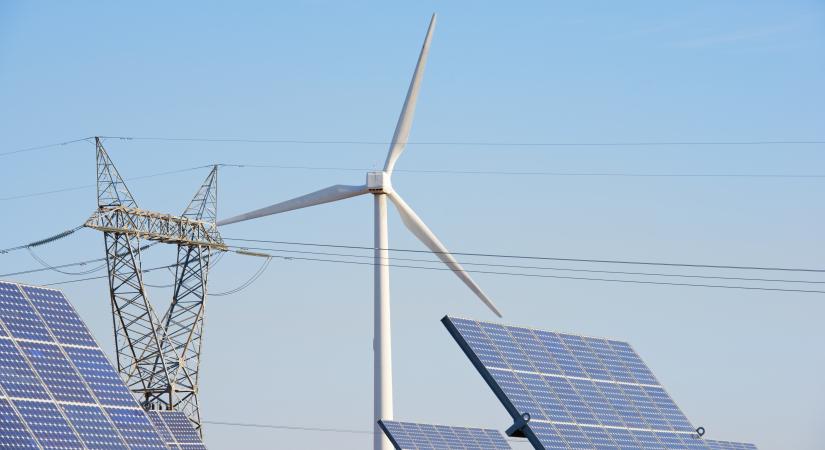
Stig Rømer Winther notes that in both Denmark and Germany, the green transition and renewable energy are high on the agenda, both among the population and in the business community, and this was also a central theme at the IHK zu Lübeck New Year's reception.
The Minister President of Schleswig-Holstein, Daniel Günther, emphasized in his speech that the energy transition and digital transformation must be used as effectively as possible to strengthen competitiveness and ensure continued prosperity.
“We will succeed with innovative and targeted solutions in renewable energy,” said Daniel Günther.

Promising Future for the Fehmarn Belt Region
IHK President Hagen Goldbeck further pointed out in his New Year's speech that in the future, it is particularly about thinking and acting in a broader perspective.
“The traffic infrastructure and the energy transition with renewable energy from wind power only work if we plan and act across national borders,” said Hagen Goldbeck, emphasizing that all actors must contribute to the planning of the future that becomes a reality with the opening of the Fehmarn Belt tunnel, creating new major opportunities for North Germany.
“Overall, the prospect of increased cooperation between Eastern Denmark and North Germany paints a promising picture for the future. With a focus on green transition and strong partnerships, the Fehmarn Belt Region is well positioned as a leading growth region in Europe,” says CEO Stig Rømer Winther, Femern Belt Development.