New Swedish report: Railway expansion can be accelerated

svensk-eltog-femern-belt-development

Several important railway sections in Skåne can be brought forward ahead of the opening of the fixed Fehmarnbelt link.
This is stated in a new report from the Swedish Transport Administration, Trafikverket, to the Swedish government.

In recent years, both Danish and Swedish politicians and business organisations have called for a faster expansion of the Swedish railway network. Now Trafikverket concludes that the development of the railway network in the Öresund region can be advanced by several years. This is stated on Trafikverket’s website.

“The cross-border traffic in the Öresund region has shown positive development for many years, and we are already actively working on preparations for the opening of the Fehmarnbelt link. As traffic across the Öresund is expected to increase further in the coming decades, we see a need for stronger Danish-Swedish cooperation on issues such as traffic forecasts, capacity planning and contingency planning. Traffic management and disruption handling can also be further developed in the future,” says Anna Wildt-Persson, Regional Director of Trafikverket’s Southern Region.

Capacity-enhancing measures
In its report to the Swedish government, Trafikverket has also taken a closer look at railway measures linked to the Södra stambanan (the line from Malmö to Katrineholm, ed.), which are included in the national plan. This is stated on Trafikverket’s website.

The report concludes that several capacity-enhancing measures can be brought forward so that they better align with the opening of the Fehmarnbelt link. For some measures, this means an advancement of several years.

“The fact that measures can be implemented earlier is not only important for traffic across the Öresund. It also adds significant value for both long-distance and commuter rail services. More capacity sooner means less vulnerability to disruptions and more reliable traffic. Everyone benefits from that. At the same time, it is important to stress that bringing measures forward requires fast processing of procedures that lie outside Trafikverket’s direct control. This includes, for example, construction start decisions and appeals against railway plans,” says Anna Wildt-Persson.

Plans to upgrade freight yards
Trafikverket’s proposal for a new national plan for 2026–2037 also includes the possibility of strengthening several freight yards, including in Malmö and Trelleborg. In addition, an investigation of the freight yard in Helsingborg is planned.

“Traffic across the Öresund is one of Trafikverket’s highest priorities, and we are confident that we are implementing the right measures to meet the increasing traffic volumes. Our proposal for the new national plan also includes further capacity-enhancing measures along the Södra stambanan that can be implemented if additional funding becomes available. In addition, there are other important measures that we believe can be financed through the surplus from the Öresund Bridge,” says Anna Wildt-Persson on Trafikverket’s website.
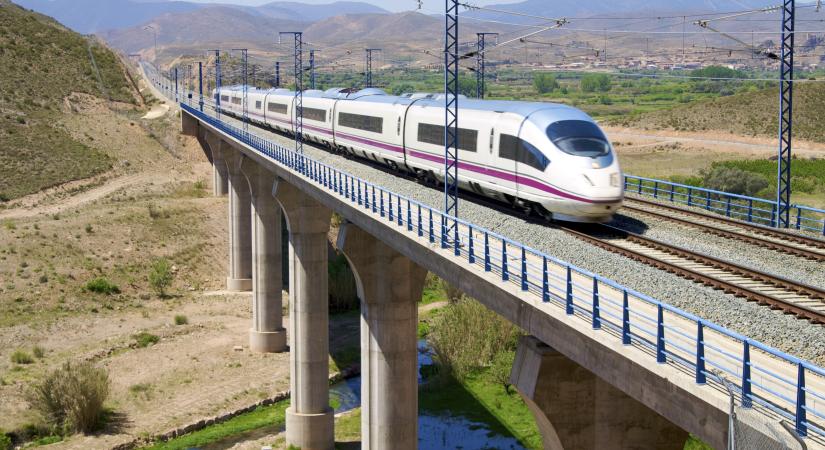
Growing pressure for expansion of the Scandinavian rail network

tog-femern-belt-evelopment

The European TEN-T corridor is in focus.
In Sweden, politicians and the business community are calling for faster expansion, in Denmark there are calls for a comprehensive plan, and in Germany the expansion of the line between Puttgarden and Lübeck is gaining real momentum this year.

Ahead of the opening of the Fehmarn Belt fixed link, pressure is increasing to develop the important TEN-T corridor into a coherent and efficient rail network stretching from Northern Scandinavia to Sicily.
In particular, the Swedish rail network is today regarded as an obstacle to fully realising the benefits of the fixed link between Denmark and Germany.

carl-johan-sonesson-femern-belt-development
Carl Johan Sonesson – will put pressure on the Swedish government. Photo: Greater Copenhagen

Most recently, the chairman of the Regional Council of Region Skåne, Carl Johan Sonesson, who has been elected chairman of the Danish-Swedish cooperation organisation between regions and municipalities in southern Sweden and eastern Denmark, Greater Copenhagen, has highlighted the issue.
“We must put pressure on the Swedish government to ensure that important investments in rail infrastructure are included in the national plan to be adopted in the spring. This applies especially to the Lund–Hässleholm and Helsingborg–Maria lines. To a large extent, this is about preparing the region so that we can fully exploit the potential that the Fehmarn Belt fixed link will create,” says Carl Johan Sonesson.

Risk of losing competitiveness
Previously, the spokesperson for Region Jönköpings Län, Rachel De Basso, and the director of Femern Belt Development, Stig Rømer Winther, have pointed to the Swedish rail network as a significant bottleneck on the European TEN-T corridor from Northern Scandinavia to Sicily.
This was stated, among other occasions, in connection with the European rail conference “A New Railway for a New Europe” in Brussels.

“Without a coherent national network including key routes such as Stockholm–Linköping–Gothenburg–Borås, Jönköping–Borås, the four-track expansion in Skåne, the Vättern link, as well as Oslo–Gothenburg and Oslo–Stockholm, Sweden risks losing both its international competitiveness and national confidence in the rail system,” says Rachel De Basso.

Support for Swedish business
“Both Denmark and Germany are investing heavily in rail expansion, but Sweden is not keeping up the pace. There is a risk that Sweden – which once strongly pushed for the Fehmarn Belt fixed link – could now instead become a bottleneck,” says Stig Rømer Winther, director of Femern Belt Development.

He points out that several major Swedish logistics companies emphasise that the Fehmarn Belt fixed link opens up entirely new opportunities for increased trade between continental Europe and Scandinavia, but that the current Swedish rail network represents a bottleneck.

“I therefore encourage both Denmark and Germany to support the wishes of Swedish business for an expansion of the rail network,” says Stig Rømer Winther.

Call for a comprehensive Danish plan

Hakon-iversen-femern-belt-development
Hakon Iversen – calls for a plan for the Danish rail network. Photo: DI Transport

The Confederation of Danish Industry (Dansk Industri) is also focusing on rail transport and the opportunities arising from the Fehmarn Belt fixed link.
Hakon Iversen, sector director at DI Transport and vice-chairman of Femern Belt Development, writes in an article on Dansk Industri’s website that there is a need for a comprehensive plan for the future of rail, and that public transport – including rail – is crucial to everyday life for many people and to the opportunities available to businesses.

“Rail also has a significant role to play in freight transport, especially in the future between Scandinavia and the continent, when the new Fehmarn Belt link opens up entirely new opportunities – and likewise as part of future military mobility. In the military field, rail already plays a strategic role among our allies both in Scandinavia and towards the south and southeast,” Hakon Iversen states in his article, which has also been published by Altinget.

Momentum in the expansion of the German rail line
In Germany, the 88-kilometre rail line through Ostholstein from the future Fehmarn Belt tunnel to Lübeck is being expanded to double track.
Construction work began in 2025 and will gain significant momentum in 2026.

The project is divided into eight sections. In addition to the rail line itself, new bridges will be built for intersecting road traffic, and noise barriers will be constructed along parts of the 88-kilometre route.

Planning of one of the largest individual elements on the route between Puttgarden and Lübeck, the combined road and rail tunnel under the Fehmarnsund, will also begin this year.

How the connection to the Fehmarn Belt Link is being built on the German side

tunnelportal-femern-femern-belt-development

Preparations for the upcoming four-lane road connection to the Fehmarn Belt Link are now visible in the northern German landscape.

The construction of the tunnel portal on Fehmarn has been visible for several years, and now forest clearing has begun in preparation for the future four-lane road connection to the fixed link between Denmark and Germany.

As we move into 2025, the German project organization DEGES – Deutsche Einheit Fernstraßenplanungs- und -bau GmbH – is taking stock of the German construction work related to the Fehmarn Belt Link.

DEGES is managing the construction work on the German mainland and on Fehmarn Island in three projects:

  • Construction of the road section from Heiligenhafen to Fehmarnsund
  • Building of a Fehmarnsund tunnel, and
  • The connection at Puttgarden to the Fehmarn Tunnel
vejanlæg-tyskland-femern-belt-development
Vejtilslutningen i Tyskland til Femern-forbindelsen sker i tre projekter: Udbygning af B 207 (blå), Femernsund tunnel (grøn) og tilslutning til Femern-tunnelen (orange). Illustration: DEGES

Expansion of B207 to a four-lane motorway

The work to expand the 16.3 km long section of the B 207 on the German mainland, from Heiligenhafen Ost to Fehmarnsund, is now underway with forest clearing and cable laying.

The section will be expanded into a four-lane motorway with a hard shoulder, and the work is expected to be completed by 2027/2028, according to DEGES, which states that the expansion will improve traffic safety and increase capacity. The overall goal is to reduce traffic jams, particularly during summer holidays and travel season.

Construction of a Fehmarnsund Tunnel

The current road and rail connection between the German mainland and Fehmarn Island crosses the 963-meter-long Fehmarnsund Bridge, which was opened in 1963.

Studies have shown that the bridge will not be able to withstand future traffic loads, and threfor it has been decided on the German side to construct a 1.7 km long submerged tunnel with four lanes for road traffic and two tracks for trains.

Construction work has not yet started, but the tunnel is expected to be completed and ready for use by 2029, alongside the completion of the Fehmarn Tunnel.

The listed Fehmarnsund Bridge – also known as the “Hanging Bridge” – will be renovated so that it can continue to be used by pedestrians, cyclists, and slow traffic in the future.

Connection to the Fehmarn Tunnel

Denmark is responsible for the planning, construction, financing, and operation of the fixed Fehmarn Belt connection, as well as the expansion of the Danish approach.

The German project organization DEGES is supporting the construction of the two tunnel tubes for road traffic on the German side, where work on the construction of the tunnel portal in Puttgarden began in 2021.

The work on the connection to the Fehmarn Tunnel in Puttgarden is expected to be completed in parallel with the commissioning of the Fehmarn Tunnel in 2029, according to DEGES.

Blowing the whistle for departure: a new climate-friendly railway connecting Denmark and Europe

ringsted-femern-banen-femern-belt-development

2024 is to be the year in which the construction of the new climate-friendly railway connecting Europe via the future Fehmarn Belt Link really takes shape.

The approximately 115-kilometre-long Ringsted-Femern line has already been completed on the section between Ringsted and Nykøbing Falster.

In the coming years, DSB will expand and upgrade King Frederik IX's bridge over the Guldborg Sound at Nykøbing Falster and a new double-track railway will be built between Nykøbing Falster and Rødbyhavn.

Preparing for tomorrow’s green electric trains
During 2022 and 2023, the old single-track railway line between Nykøbing Falster and Rødbyhavn was removed by DSB. The new railway embankment that will carry the future double-track railway was then established.

At the same time, a new station has been built near Holeby on Lolland.

DSB is currently preparing to build the new railway across Lolland.

The work is expected to continue throughout 2024, after which the line will be electrified and prepared for tomorrow’s green electric trains.

In addition, the new pan-European digital signalling system ERTMS will be installed on the line, making it possible to run cross-border train traffic via the Fehmarn tunnel.

Climate-friendly transport corridor
The Ringsted-Femern line is amongst Denmark’s largest ever building projects.

It will be an important part of the future new climate-friendly transport corridor between Denmark and Europe when the Fehmarn Link opens as planned in 2029 and reduces the travel time between Copenhagen and Hamborg to approx. 2,5 hours.